
Modeling the Effects of Orthognathic Surgery on Obstructive Sleep Apnea
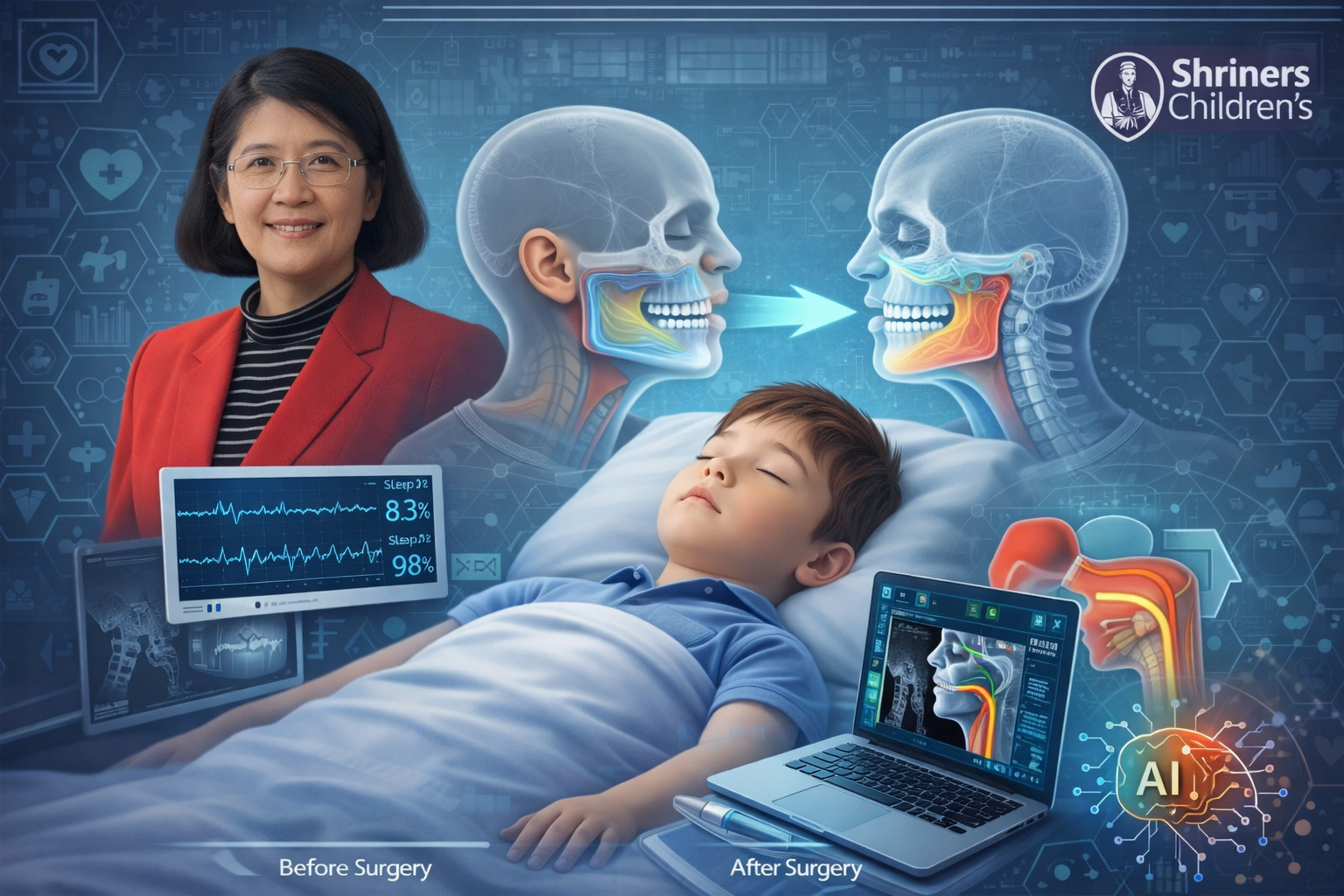
This project uses artificial intelligence to analyze medical imaging and clinical data to better understand how orthognathic (jaw) surgery affects obstructive sleep apnea (OSA), particularly in children with cleft lip/palate and dentofacial deformities. By identifying anatomical and clinical risk factors, the research aims to predict which patients are most at risk and determine how surgery can improve airway function and sleep outcomes.
Project Overview
The Challenge
Obstructive sleep apnea (OSA) is a significant health issue that affects both adults and children and can lead to serious complications such as stroke, hypertension, heart failure, and early death. It is especially relevant in pediatric populations with cleft lip and/or palate and dentofacial deformities, both of which are commonly treated by Shriners Children’s. Despite the clinical importance of OSA in these groups, it can be difficult to identify which patients are at highest risk and how surgical intervention may change their airway and sleep outcomes. There is a need for better predictive tools that can combine imaging and clinical data to guide diagnosis and treatment.
The Innovation
This project uses artificial intelligence to integrate radiographic, photographic, and clinical data in order to identify anatomic and clinical predictors of OSA. It also models how orthognathic surgery affects airway shape and sleep apnea outcomes in pediatric patients. By applying multimodal analytics to this problem, the study moves beyond traditional evaluation methods toward more precise, data-driven risk assessment. The work also helped generate conference presentations and publications related to AI-based OSA detection and airway analysis.
Objective
To use artificial intelligence and multimodal patient data to identify predictors of obstructive sleep apnea and model how orthognathic surgery influences airway and sleep outcomes in high-risk pediatric populations.
Current Phase
The original project is complete overall, with one aim completed and the surgical modeling aim extended into the AIR-SPACE follow-on effort beginning January 1, 2026
Potential Impact
This work could enable clinicians to identify high-risk patients earlier, potentially from imaging alone, and improve treatment planning for children affected by OSA.

Interested in collaborating or supporting this work?
We welcome clinical partners, research collaborators, and supporters who share a commitment to advancing pediatric innovation. Reach out to connect with the project team or explore related work across GTPIN.