
Machine Learning and Functional Validated Analysis of Orofacial Cleft
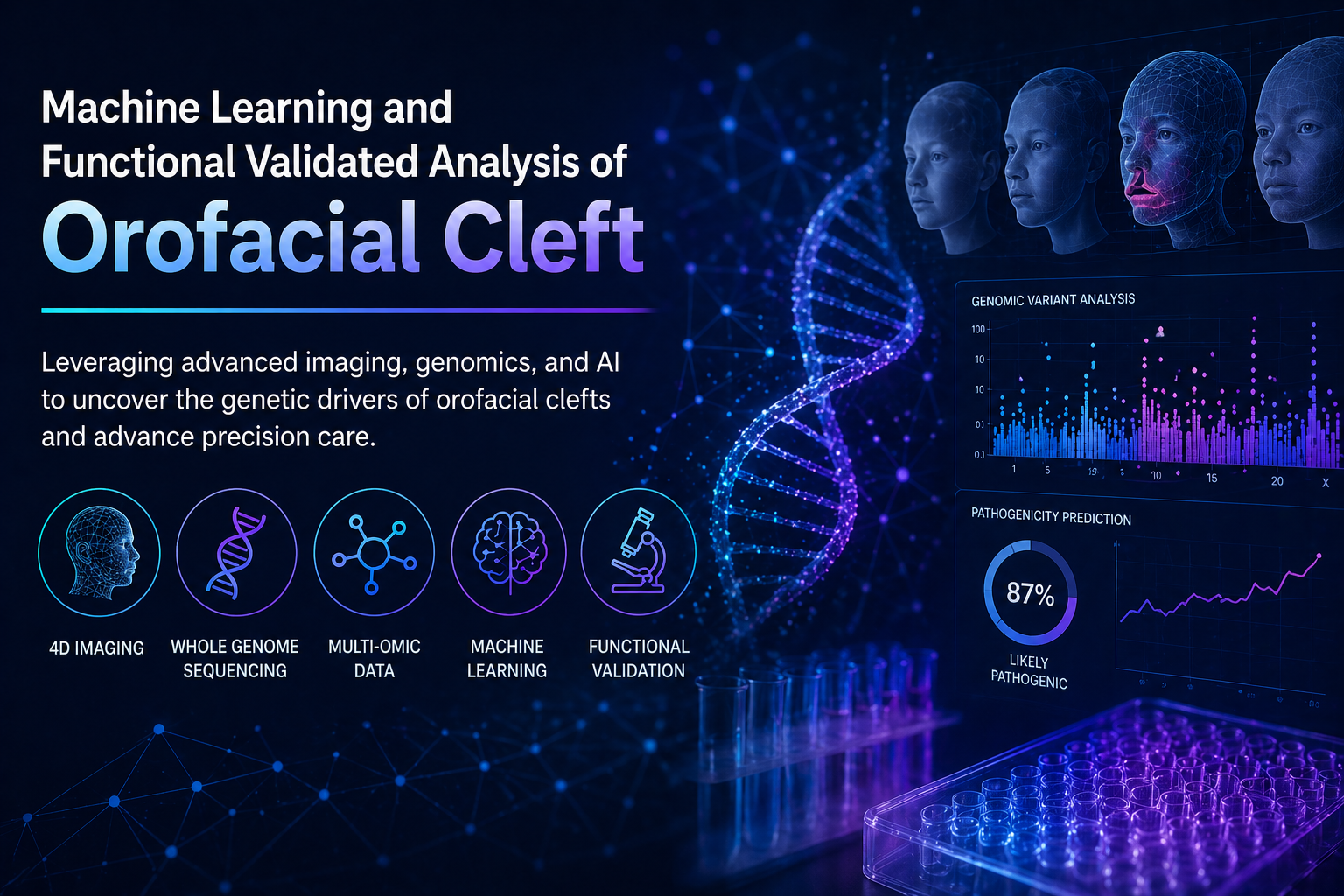
This project applies machine learning to one of the major translational gaps in orofacial cleft care: identifying which genes are associated with specific cleft phenotypes and determining whether discovered gene variants are likely pathogenic. The work combines 4D imaging, whole genome sequencing, multi-omic data, and functional validation to better understand the genetic drivers of cleft formation.

Project Overview
The Challenge
Orofacial clefts are among the most common structural birth anomalies, yet advances in cleft genetics have not fully translated into clinical tools that can guide diagnosis, prognosis, or individualized care. Researchers need better methods to connect cleft phenotypes with candidate genes and determine which variants are clinically meaningful.
The Innovation
The project uses advanced machine learning approaches, including GeneDAE, to prioritize genes and variants for experimental validation. The team has demonstrated that GeneDAE can identify SNPs and genes associated with IRF6, a known cleft-related gene, and is extending the analysis to TP63 while expanding from targeted chromosome-level analysis to genome-wide discovery.
Objective
To use machine learning, whole genome sequencing, 4D imaging, and functional validation to prioritize genes and variants associated with orofacial cleft phenotypes.
Current Phase
Ongoing. The team is refining multi-omic data integration, expanding GeneDAE to genome-wide analyses, and preparing to validate candidate SNPs and genes through experimental studies.
Potential Impact
This work could help clinicians and researchers better identify genetic contributors to orofacial clefts, improve variant interpretation, and support more personalized approaches to diagnosis, risk assessment, and long-term care.
Interested in collaborating or supporting this work?
We welcome clinical partners, research collaborators, and supporters who share a commitment to advancing pediatric innovation. Reach out to connect with the project team or explore related work across GTPIN.