
FUSION: Surgical Risk Prediction
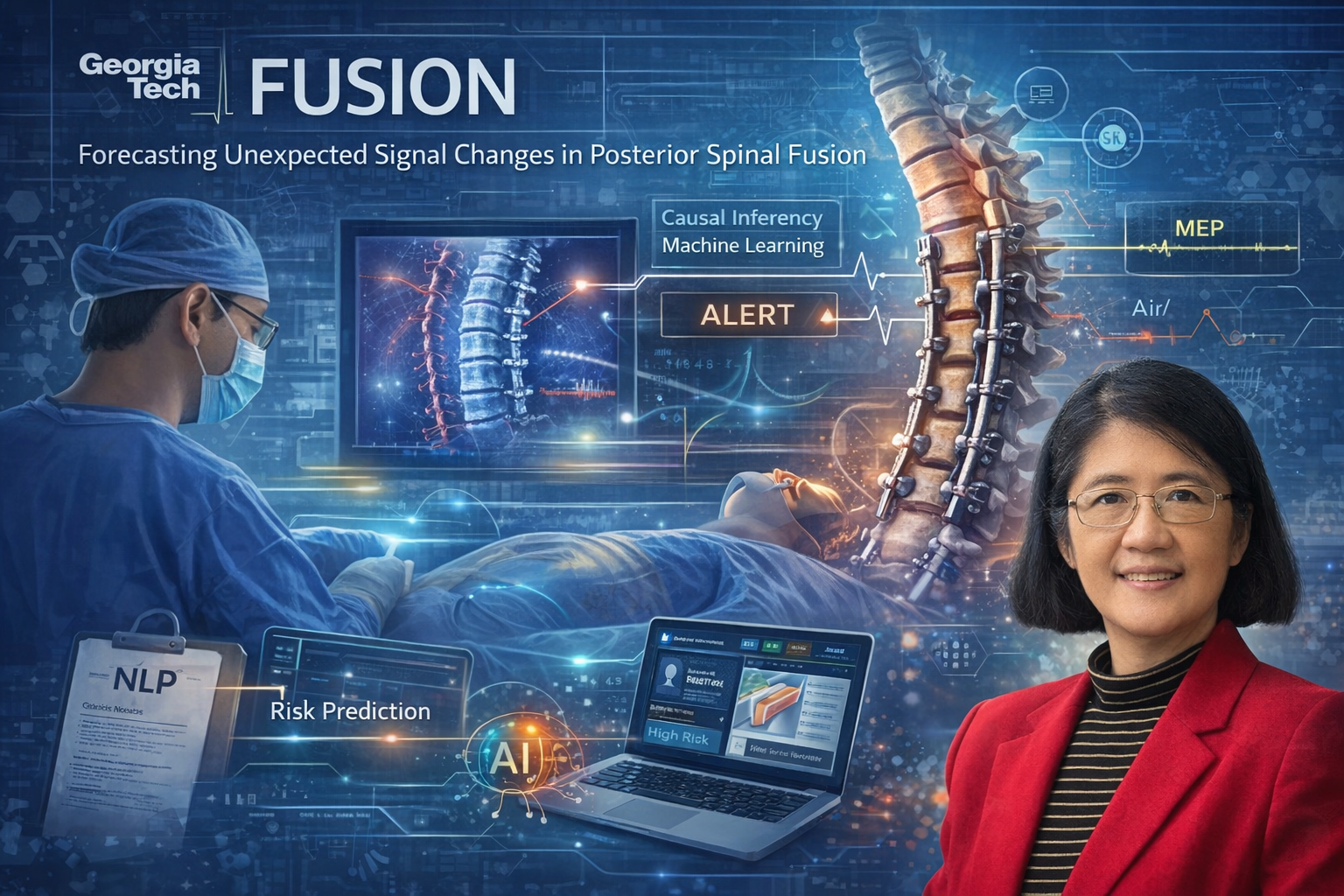
FUSION (Forecasting Unexpected Signal Changes in Posterior Spinal Fusion), focuses on improving risk prediction during spinal fusion surgery using advanced machine learning techniques. By analyzing multimodal clinical data including: patient demographics, diagnoses, and surgical plans. The research aims to identify patients at risk of intraoperative neurological complications. This project integrates natural language processing, predictive modeling, and causal inference to support more informed surgical planning and better patient outcomes.
Project Overview
The Challenge
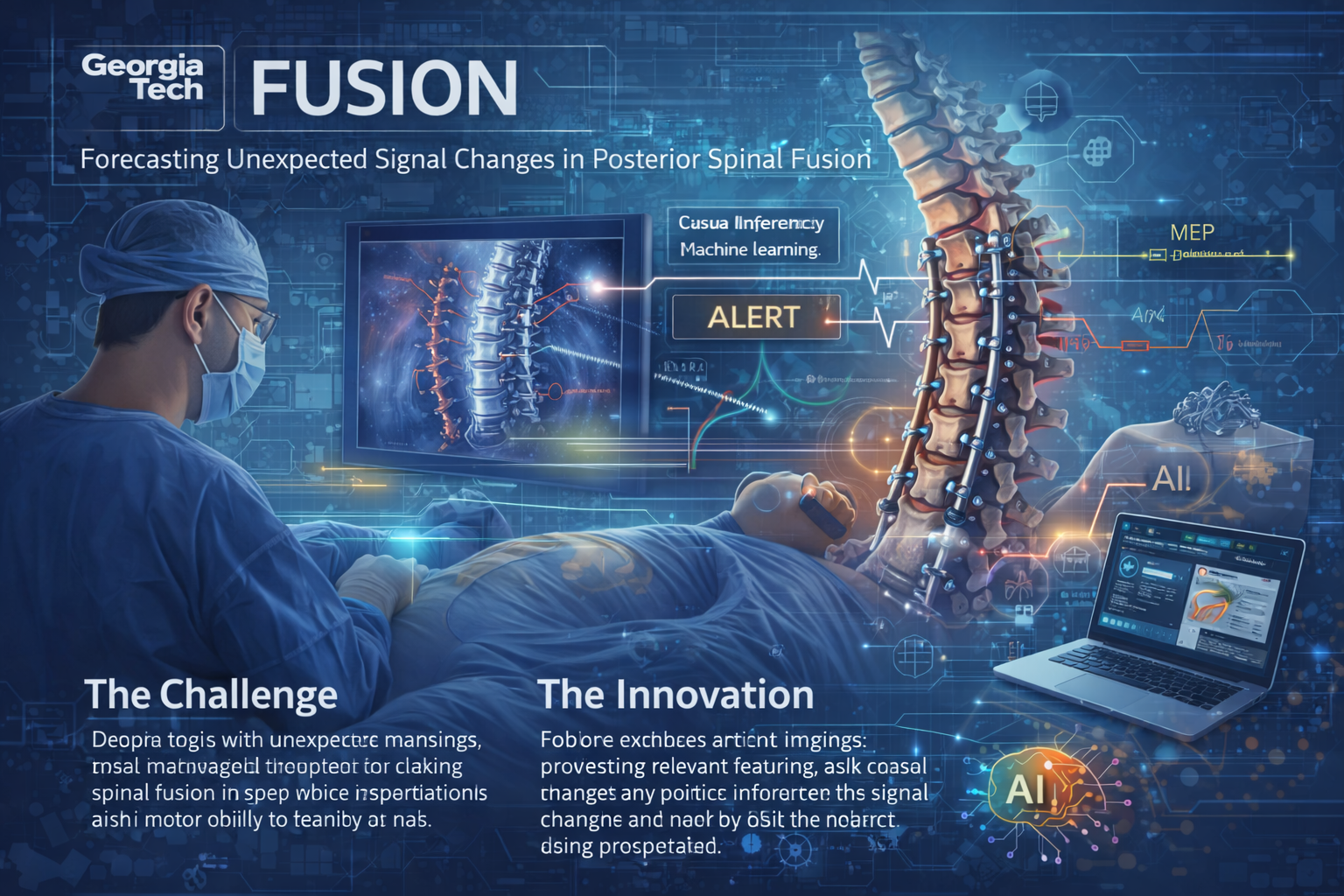
Despite the use of intraoperative neuromonitoring, some neurological complications during spinal fusion surgery occur unpredictably, with limited ability to identify at-risk patients beforehand. This lack of reliable preoperative indicators makes surgical planning and outcome prediction difficult.
The Innovation
FUSION integrates natural language processing, machine learning, and causal inference to create a data-driven pipeline for surgical risk prediction. It extracts intraoperative signal changes from clinical notes and uses preoperative data to identify at-risk patients, while also analyzing how these events impact outcomes. This approach enables more accurate, personalized decision-making in spinal fusion surgery.
Objective
To develop a data-driven pipeline that predicts intraoperative signal changes and identifies patients at risk of neurological complications during spinal fusion surgery.
Current Phase
Active - Developing and validating machine learning models, with NLP-based signal detection completed (Phase 1) and continued work on risk prediction and causal analysis.
Potential Impact
Enables earlier risk identification, improves surgical decision-making, and reduces adverse outcomes by introducing a data-driven approach to spinal fusion risk assessment
Interested in collaborating or supporting this work?
We welcome clinical partners, research collaborators, and supporters who share a commitment to advancing pediatric innovation. Reach out to connect with the project team or explore related work across GTPIN.